
I Used AI to Write 100 Blog Posts — Here’s What Happened
2026-03-10
A/B Testing Mistakes I Made So You Do Not Have To
2026-03-17
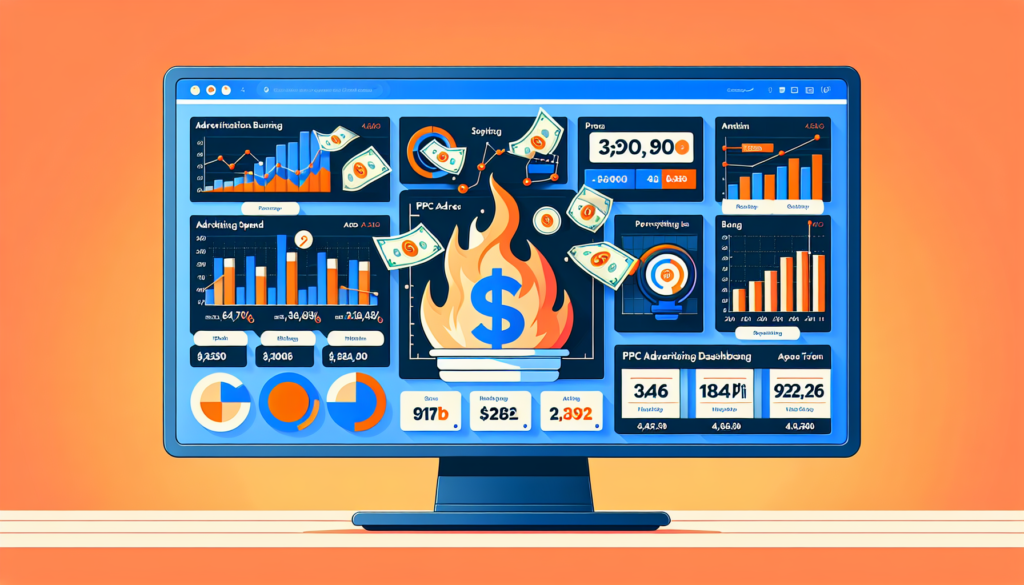
I spent $50,000 on Google Ads. It was not my money — it was a client’s. They trusted me with a $10,000 monthly budget for five months and told me to make it work. The first two months were bad. I wasted about $12,000 on clicks from people who were never going to buy anything. By months four and five the campaign was actually profitable. Here is what happened month by month, including all the mistakes.
Month One: The Expensive Learning Phase
I launched with five ad groups using broad match keywords and automatic bidding with a $300 daily budget. I thought I was being smart by giving Google’s algorithm maximum flexibility to optimize. Instead I spent $4,200 in the first week on clicks from people searching for phrases like “free templates,” “DIY guide,” and “how to fix [our product category].” None of those people wanted to buy anything. They wanted free information. My conversion rate was 0.3 percent. Cost per acquisition was $340. The client’s target was $50.
Looking back, the mistakes were obvious. Broad match keywords give Google permission to match your ads to any search query that is vaguely related to your keywords. If you sell premium software and someone searches “free alternative,” Google will happily show your ad and charge you for the click. The algorithm does not care about relevance. It cares about spending your budget.
What I should have done: start with phrase match keywords only. Build a negative keyword list before launching the campaign. Set a maximum CPC bid instead of using automatic bidding. Start with a $100 daily budget instead of $300. These all sound like basic常识 now, but when you are anxious to get results, you skip the boring setup steps.
Month Two: Fixing the Leaks
After the disastrous first month, I pulled the search terms report and looked at every single query that had triggered my ads. There were about 1,200 unique search terms. About 680 of them were completely irrelevant to what we were selling. Things containing words like “free,” “how to,” “DIY,” “cheap,” “repair,” “tutorial.” None of those searchers were potential buyers, but Google was happily showing them our ads.
I added all 680 irrelevant terms as negative keywords. The change was immediate. Click-through rate went from 1.2 percent to 3.8 percent — not because the ads got better, but because they stopped showing to people who were searching for the wrong things. Cost per click dropped from $8.50 to $3.20. Total spend went down significantly, but conversions stayed the same. We were spending less money to get the same number of results.
The lesson: negative keywords are not optional. They are the single most important optimization you can make in the first thirty days of a campaign. Review your search terms report every forty-eight hours for the first two weeks. Every single time you do it, you will find more terms to add.
Month Three: Finding the Winning Combination
I split the campaign into three experiments to figure out what approach worked best for this specific client. Experiment one used exact match keywords with manual CPC bidding at a $5 maximum. Experiment two used phrase match with enhanced CPC. Experiment three used broad match with a target CPA of $45.
The exact match experiment had the best conversion rate at 4.2 percent but generated the lowest volume. The broad match experiment had the highest volume but a worse conversion rate at 2.8 percent. Neither alone was ideal. The winning approach was a combination: exact match keywords for high-intent terms where we knew exactly what people were searching for, and broad match with a tight target CPA for volume.
One thing that surprised me about the broad match experiment: it was inconsistent. Some days it would find cheap conversions at under $30 each. Other days it would spend $80 on a keyword without a single conversion. Broad match needs more volume to stabilize, which means it needs more budget. For a smaller budget, exact match is safer.
Months Four and Five: Finally Profitable
By month four we had the campaign running at $300 per day and generating about $1,200 per day in revenue. Cost per conversion stabilized at $38, comfortably under the $50 target. We added audience targeting using in-market segments and cost per acquisition dropped another 15 percent. We expanded to twelve ad groups with about 60 keywords total. Nothing dramatic, just steady incremental improvement.
The final ROAS was about 4:1. Not the kind of number that makes you a hero in case studies, but solidly profitable and sustainable. The client was happy because they were getting a clear return on their investment.
What I Would Do Differently
If I had another $50,000 to spend for a new client, I would be profitable by month two instead of month four. The difference between my first campaign and my current approach is entirely in the setup. I now start with phrase match only, build at least 50 negative keywords before launch, check search terms daily for the first fourteen days, use manual CPC with a hard cap until there are at least 100 conversions, and pause any keyword that spends more than double the target CPA after 50 clicks.
Most of these are simple, obvious rules. I just did not follow them at first because I was impatient and wanted to see results quickly. The $12,000 I wasted in months one and two was essentially tuition for learning to slow down and do the setup properly.
Related Articles
5 PPC Campaign Mistakes Burn Your Budget (And How to Fix Every Single One)
Remarketing That Doesn’t Creep People Out