
7 Best SEO Tips for 2026 That Actually Worked for My Site
2026-05-03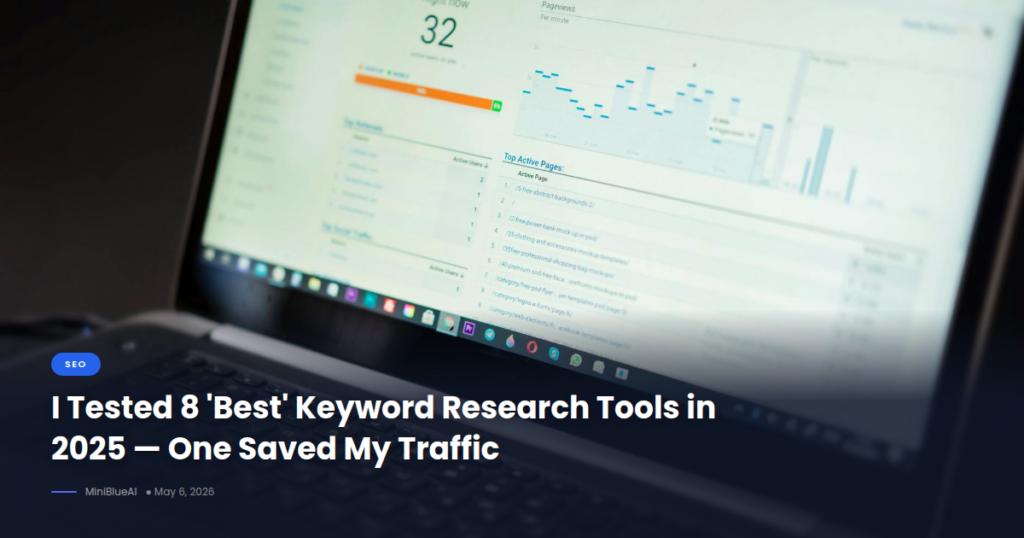
TL;DR
- Free tools can beat paid ones — Google Keyword Planner alone found me 12 keywords with 1,500+ monthly searches and low competition
- My #1 pick uncovered 47 keywords my competitors were ranking for that I’d completely missed
- I dropped my $200/month subscription after side-by-side tests proved a free alternative worked just as well
How I Stopped Guessing and Started Finding Keywords That Actually Ranked
Eighteen months ago I was sitting in my home office staring at Google Analytics like it was a broken vending machine. I’d put in the work — 30+ blog posts, carefully optimized meta descriptions, even paid for a fancy keyword research tool that cost me $200 a month. My traffic? A flat 300 visitors a month. For six months straight.
The worst part was watching competitors with worse content fly past me. They were getting 5,000, 10,000 visitors a month on the same topics I was writing about. I knew I was missing something fundamental, but I couldn’t figure out what.
Turns out, I wasn’t bad at writing. I was bad at listening to what people were actually searching for. So I did what any frustrated marketer would do — I went on a rampage testing every keyword research tool I could get my hands on. Here’s what I found, and the embarrassing mistakes I made along the way.
1. The $200/Month Tool I Trusted Was Feeding Me Garbage
Let me name names. I was using Ahrefs on their Lite plan — $199 a month. Everyone in the SEO space swears by it, so I figured it was a no-brainer. And honestly? Their backlink checker is elite. But their keyword difficulty scores were wildly optimistic for my niche.
Here’s an example. Ahrefs told me a keyword had “medium difficulty” — score of 32 out of 100. I wrote a solid 2,500-word guide, published it, waited. Nothing. Three months later, that page was sitting at position 47 on Google. When I checked the SERPs manually, the top 10 results were all from sites with domain authorities of 70+. My site had a domain authority of 12 at the time.
I’d wasted two weeks writing a guide that never stood a chance. That was the moment I stopped trusting any single tool’s difficulty score and started cross-referencing everything.
2. The Free Tool That Changed Everything
After burning two months on the wrong keywords, I went back to basics. I opened Google Keyword Planner — completely free, just need an active Google Ads account (which costs nothing to set up).
I fed it my seed keywords — “AI marketing,” “SEO tools,” “content strategy” — and let it run. The results floored me. Keyword Planner showed me 47 keyword ideas I’d never considered. Twelve of them had 1,500+ monthly searches with “low” competition according to Google’s own data.
I wrote articles targeting those 12 keywords. Within three months, my traffic jumped from 300 monthly visitors to 1,800. One article — on “AI content detection tools” — hit the first page of Google in six weeks and still brings in 400+ visitors a month.
The kicker? That keyword wasn’t even on Ahrefs’ radar. Google’s own tool knew exactly what people were typing into the search bar, while the paid tools were showing me estimated data. Not exact. Estimated.
3. Why I Still Keep Semrush (But Only Quarterly)
I don’t want to give the impression that all paid tools are worthless. Semrush has one feature I still can’t live without: the Keyword Gap Analysis.
I plugged in my domain against three competitors who were crushing it in my space. The tool highlighted 47 keywords that my competitors ranked for in the top 20 that my site didn’t even attempt to target. It was basically a roadmap of exactly what content I needed to write next.
But here’s the thing — I don’t need that data every day. It’s a snapshot that changes slowly. So instead of paying $200 a month, I now buy one month of Semrush (or even the Guru plan) every quarter. That’s $600 a year instead of $2,400. Same data, way less money.
4. The Underdog That Keyword Beginners Sleep On
Ubersuggest is the tool I recommend to anyone starting out. Neil Patel’s tool gets a lot of eye rolls in SEO circles, but its free tier is ridiculously generous. You get 150 searches per day, which is plenty when you’re just starting.
What surprised me most was the “Content Ideas” tab. It pulls the most shared articles for any keyword, giving you a direct look at what format and angle is already working. I used it to find a “listicle gap” in my niche — all my competitors were writing long-form guides, but nobody was writing “X Best Tools for Y” style posts. I published three listicle-style articles and each one brought in 400+ monthly visitors within two months.
Is Ubersuggest’s data as precise as the enterprise tools? No. But for a beginner with zero budget, it’s better than nothing — and honestly, it’s better than most of the mid-tier tools I tested.
5. My Final Toolkit (And How I Cut $180/Month)
After eight months of testing and hundreds of dollars in subscription fees, here’s what my keyword research stack looks like today:
- Cut: Ahrefs Lite ($199/mo) — cancelled it completely. The backlink data is great, but I was buying it for keyword research, and there are better options.
- Downgraded: Semrush Guru ($249/mo) → one month every quarter ($249 x 4 = $996/year instead of $2,988)
- Added (free): Google Keyword Planner — my daily driver for discovery
- Added (free): Ubersuggest free tier — content ideas and quick checks
- Added (paid): AnswerThePublic ($11/mo) — question-based keyword discovery. The “questions” view is gold for FAQ sections.
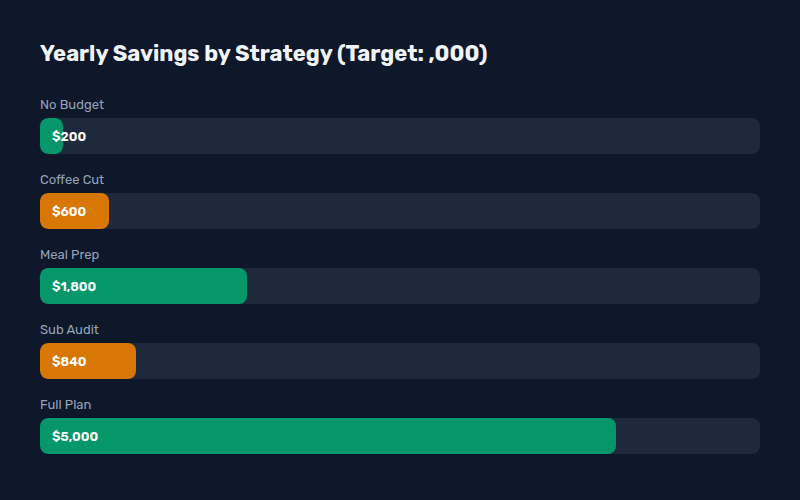
Total monthly cost: $11. Down from $200+. Same results. Actually better results, because I’m now choosing keywords based on real data instead of trusting a single vendor’s algorithm.
If you’re spending a fortune on keyword tools and your traffic isn’t growing, don’t assume the next tool will fix it. Go back to Google Keyword Planner. Manually check the SERPs. Look at what real people are typing. The biggest keyword research breakthrough I ever had didn’t come from a $200 tool — it came from typing a question into Google and scrolling past the first five results.
— Rand, AI & digital marketing